Stored product pest
It is important to recognise the insects that attack
stored products. Because knowing how to identify them,
their habits and levels of damage allows
us to take the appropriate measures of control.
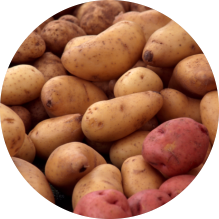
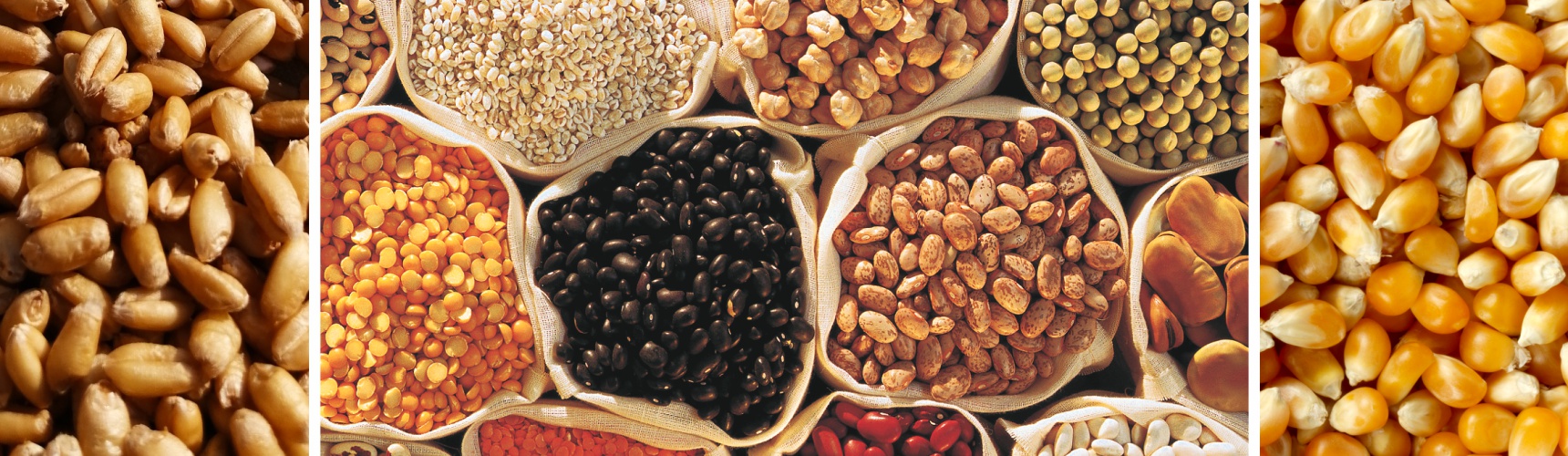
It is important to recognise the insects that attack
stored products. Because knowing how to identify them,
their habits and levels of damage allows
us to take the appropriate measures of control.
The warehouses are poor artificial ecosystems and relatively isolated from the outside, where there are a number of species that can destroy, damage or devaluate between 10% and 30% of the products stored inside them. These variations depend on a multitude of factors, such as type of warehouse, the area in which it is located (climate conditions), the type of product stored, its handling, the control techniques used, etc.
However, not everything that is found on a stored product is a true pest. Amongst the warehouse fauna, two large groups of species can be distinguished:
The true stored product pests. Are those that depend on the stored product for their development and represent a very small number, they are largely arthropods: 75% are coleopterans or beetles; 15% are butterflies or lepidopterans and the rest are mites, cockroaches, etc.
The remainder. In this group there are also a number of species who are harmful, that can be just as significant as the previous group, even though they do not continuously reproduce in the warehouse, and also a number of predatory and parasitic species. Amongst the harmful species there are those that have been accidentally introduced due to the product, such as some arthropods (for example, the lentil weevil). Also, rodents and birds that enter the warehouses attracted by food, and other species that have necrophagous or mycophagous habits, etc. They all contribute equally to the destruction of the stored product by consuming part of it and/or soiling it through moulting or defecation, etc.
Food. It is abundant and more constant than on the outside of the warehouses, so the amount is not a limiting factor for any species throughout the year.
Temperature. It is higher and more constant than on the outside, especially in winter, which benefits the different species. Above 15°C the risk of attack begins, although in general, it should be above 20°C so that the different species can develop and reproduce normally.
Humidity. The environmental humidity, which should be more than 50-60% for the arthropods to develop, has as much of an influence as the food, which should be more than 13%.
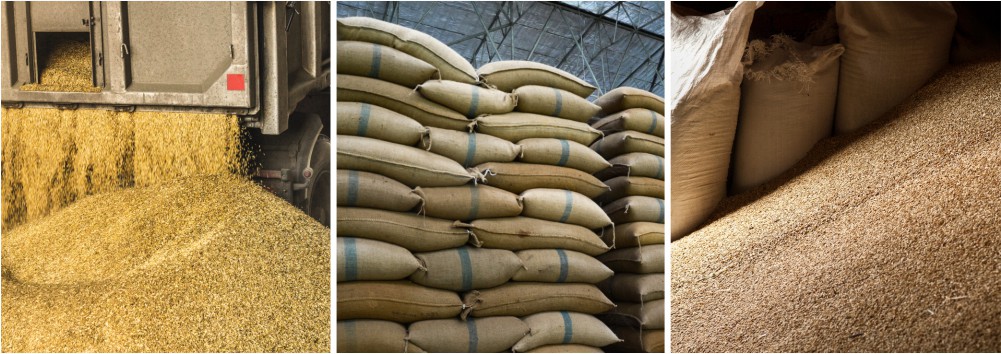
Warehouse conditions. The warehouse characteristics, as well as the handling of the products located there or their condition, can favour the pests development. For example:
The arthropods found in warehouses have very changeable life cycles, depending on the species, the conditions of the warehouse and the type of product stored. This means that the number of annual generations can vary significantly for the same species, although it is usually high.
The species that live exclusively in the warehouse have the great advantage of not being exposed to the external climate conditions, which are more varied, and of having a large amount of food at their disposal. So, the number of annual generations can be very high, but they suffer the great disadvantage of competing for space and food when the population levels increase. So, if the conditions that are favourable to them change, they are eliminated more easily.
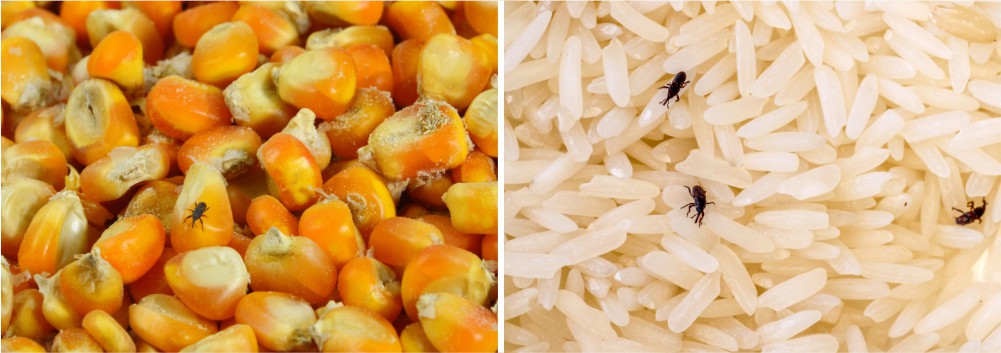
The species living in the warehouses produce two types of damage: Direct, As a consequence of the consumption of the product, Indirect , Produced through heavy damage, excrement and moulting, as well as the organoleptic alterations of the food.
Direct damage.
Indirect damage.
MAIN WAREHOUSE PESTS
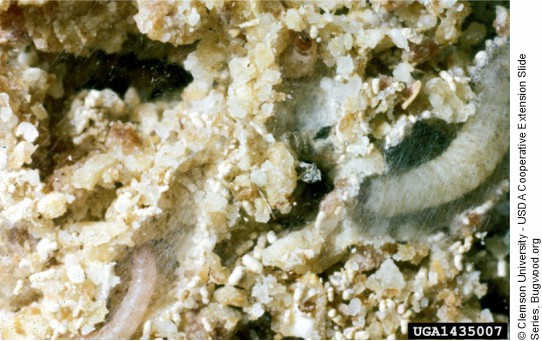
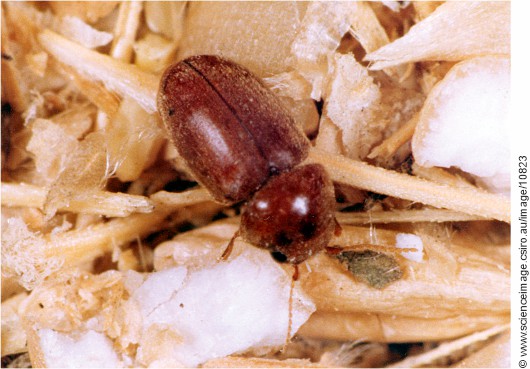
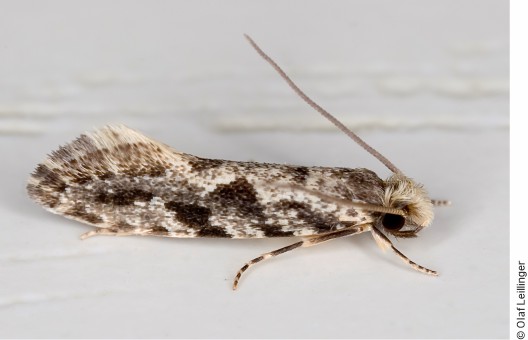
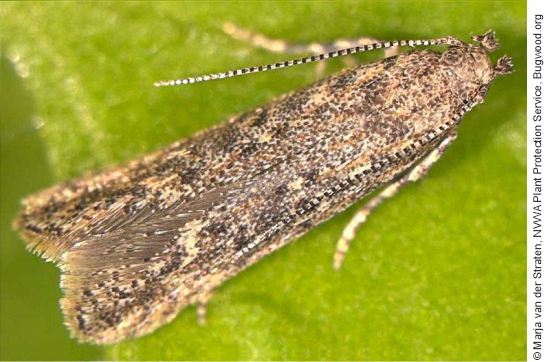
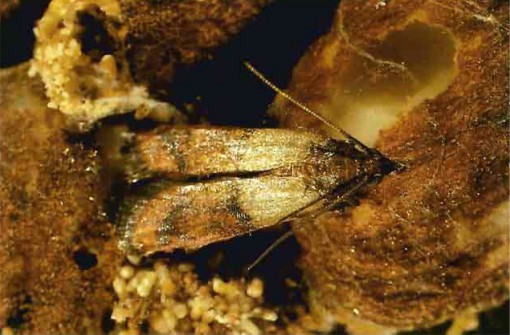
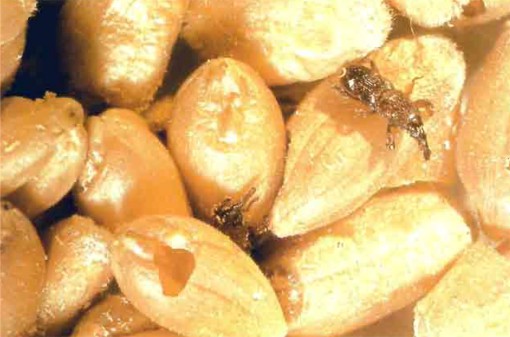
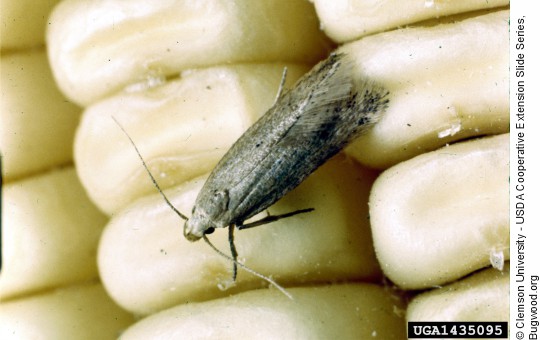
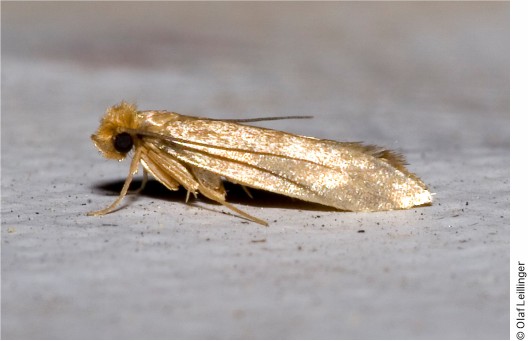
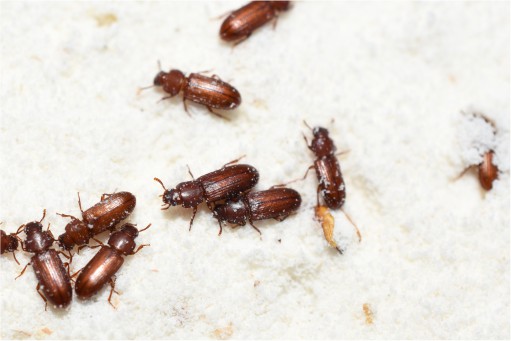
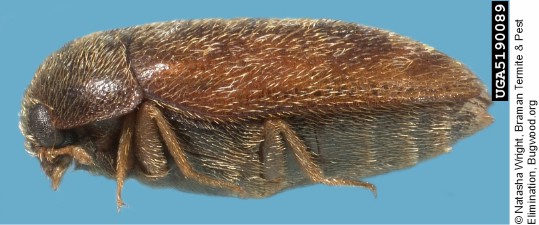
The majority of warehouse pests are insects. Amongst the pests of greatest economic consequence, the following can be found:
-cautella.jpg)

-figulilella.jpg)
-kuehniella.jpg)
BIOCONTROL
SANIDAD AGRÍCOLA ECONEX, S.L. has developed a pest biocontrol system for stored products. It is an ecological method that does not leave pesticidal residues in stored foodstuffs.
For stored products, more and more often there is a tendency towards using methods of monitoring and control that are environmentally friendly. To carry out these treatments with success, it is essential to detect the pest in time, to know the areas where it originates from and determine the efficiency of the measures taken to control the pest: all of the above are resolved by using traps with pheromones.
For the traps to work effectively, prior biological knowledge of the pest is necessary.
The traps should be placed in areas where the stored product pests are most likely to be found, and at specific points in the food production process, where a quick detection of the presence of insects is important.
The trap density varies between a minimum of 3 and a maximum of 9 traps per 1,000 square metres of warehouse.
The spaces near an infected area should have traps, as well as the corridors, that also connect to an infected area. And, if the spaces come out directly from it, then 2 traps should be placed in a line (one after the other).
It would be convenient for warehouses with smaller amounts of stored product to also place traps.
Where the activity is significant, traps should be checked weekly to observe the number of insects captured and every 15 days in those warehouse case where the pest is not so important. for the rest.
Preventing the attack is the first objective to be achieved, given that an early intervention can prevent damage to stored products or reduce its impact.
Prior cleaning of the premises and machinery. It is essential and should be carried out before the goods are introduced into the warehouse as the remains of dirt, old grain, etc., can favour the development of the insects. It is equally important to repair walls and ceilings if necessary, so that they do not have any cracks or gaps that can provide shelter for potential pests.
It should be taken into account that the entry of any goods into the warehouse could be a source of reinfestation and should therefore be carefully examined before they are introduced. And, whenever possible, place the goods in quarantine in order to detect small levels of contamination, which would otherwise go unnoticed.
Isolation. It is advisable to isolate the warehouse as much as possible from the outside to try to stop the pests from entering.
Packed goods. The packaging should be quite air-tight so that the product is not easily accessible to pests during the time it is stored or whilst being transported, and also avoiding the emission of odours that could attract them.
Air circulation. With regard to cereals, when harvesting them, the temperature threshold necessary for a pest attack is often exceeded. Therefore, measures aimed at cooling the grain as quickly as possible must be put into immediate effect, as it naturally cools very slowly and the risk of attack is there for a longer period.
Drying. Some products, for example corn, have to be dried artificially before finally storing them.
Storage. The goods should not be placed directly on the floor, but on a base or support that is preferably made of plastic. This makes airing out easier and allows for an inspection of the lower areas, as that is usually where the biggest humidity problems are found. Also, to make inspecting easier, the goods and machinery should be separated 1 metre away from the walls.
Sources:
- Food and Agriculture Organization of the United Nations (FAO) / Insects that damage grains and stored products / / http://www.fao.org/3/x5053S/x5053s00.htm#Contents
- Stored product pests. Ministry of Agriculture, Fisheries and Food, National Institute of Agrarian Reform and Development, Elisa Viñuela Sandoval [et al.] (1993)
ECONEX LEARNING CENTER
ECONEX puts at your disposal the first open knowledge center that brings together everything necessary to implement pest biocontrol in your crops. We have developed different types of resources to share with you the knowledge we have acquired during our more than 40 years of experience. Each of them is designed to respond, in the best possible way, to different questions related to pheromones, attractants, repellents and insect traps.
To access ECONEX LEARNING CENTER click on the image.

SANIDAD AGRÍCOLA ECONEX, S.L. only guarantees the composition, formulation and content of the products, taking responsibility for the direct, immediate and exclusive damages caused in the composition, formulation and content of the products sold. SANIDAD AGRÍCOLA ECONEX, S.L. will not be held responsible for damages produced by factors beyond the company’s control that have either totally or partially contributed. For instance, the weather conditions, usage or mixing with other products, amongst others. In addition, SANIDAD AGRÍCOLA ECONEX, S.L. will provide recommendations and information supported by extensive and meticulous research and tests; which must be taken into account by the customer when using the products. The customer will be responsible for any damage caused, in whole or in part, for the total or partial non-observance of the instructions provided. Furthermore, the customer will be responsible for all that is referred to as the performance of the products; which comes from total or partial non-observance of the instructions and information provided by the company.